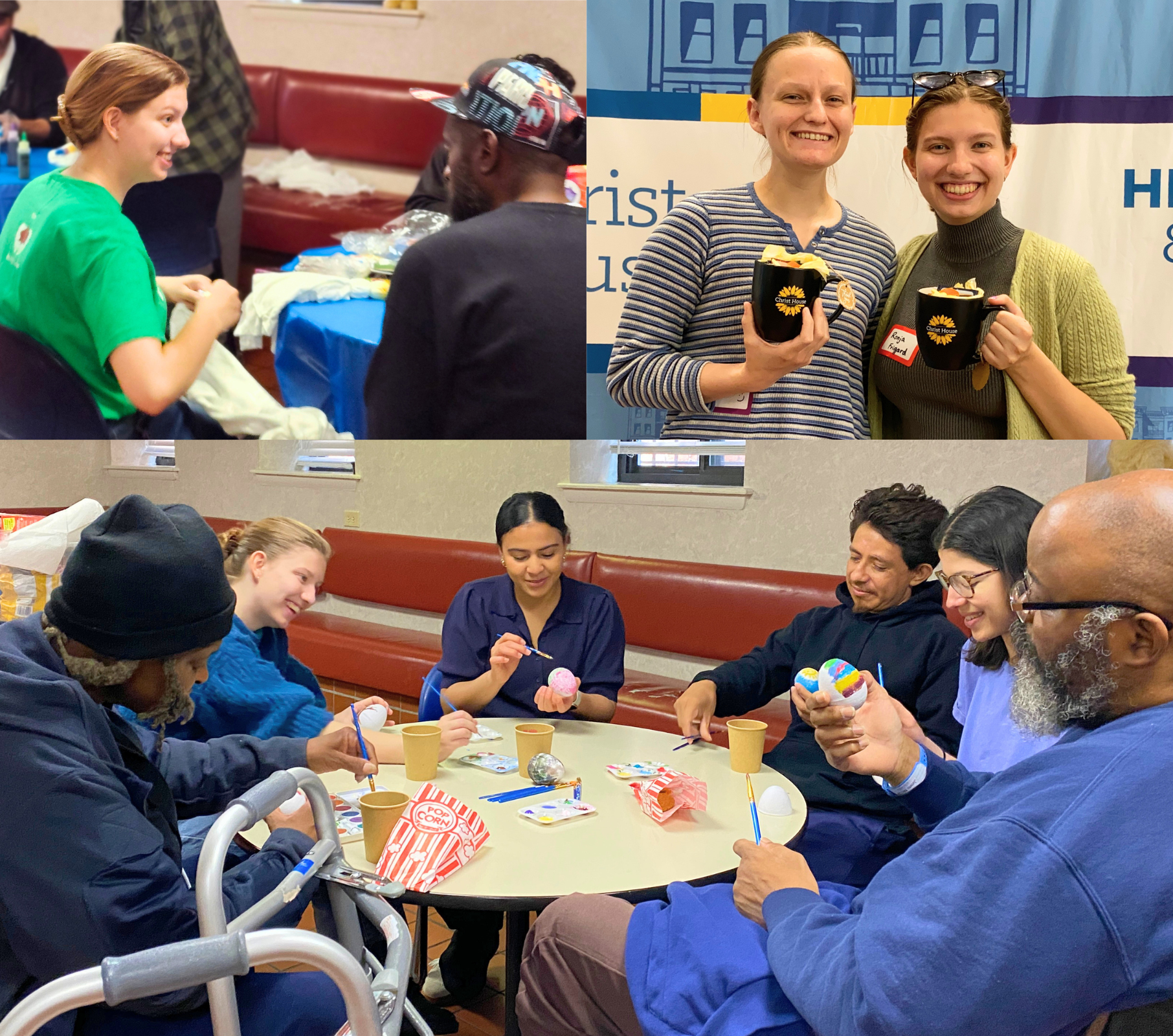
Excerpts from an interview with Ronja Frigard, who has volunteered at Christ House for the past year and a half while working at the NIH, where she studies vector-borne diseases. Ronja will be joining UC San Diego’s MD-PhD program to train in both medicine and biomedical research. We will miss her at Christ House and wish her all the best!
“My name is Ronja, I moved to DC about two years ago. I’m from a pretty small town so I’d never really seen homelessness in the way that exists here in the city, and so immediately I was pretty shocked and struck by it and that encouraged me to look for ways to get involved that weren’t just giving someone a couple bucks and not knowing if they had a place to sleep or enough to eat.
Christ House is really uniquely dedicated to the whole person and making sure there is continuity of care and that was really important to me.
In addition, I am pursuing my medical career so the aspect of taking care of those who are not well also really appealed to me and Christ House really fit the bill.”
What do you do here at Christ House?
“I do a lot of everything. I started at the nurses station, I really love that. The practice of medicine is really interesting to me and our nurses and nursing staff are really the best, I think—so it’s always really wonderful to watch them take care of people.
So, about once a month I run a craft. I do knitting and crocheting and painting. We did paper mache once—that was quite messy. Tie dye is a very popular one. We made wallets, notebooks, just a variety of stuff.
I try to do things that they get something out of that they can take with them and is personalized to them, because I think one of the hardest things, in speaking to people who have experienced homelessness, is the loss of identity and personal belongings.”
Memorable Moments at Christ House
“My favorite times are when people just want to have a conversation.
There is one patient in particular who would come to the nurses station while I was working and I’d be knitting. He would tell me about how his mom used to knit when he was a child, and we would talk about that. Eventually I learned about his son and his sister. I just love talking to people and hearing about their lives.
I feel like you have a moment like that everyday here. I think that when people are going through very difficult times, it really brings out who they are as a person and you get to see the most fundamental elements of who people really are.”
What was encountering homelessness in DC like?
“As I mentioned, I grew up in a super duper small, rural town. I had a lot of conceptions about what homelessness was and what homeless people were. Some of those conceptions are accurate—that mental health is a big thing and substance use disorder is a big thing—but I realized that homelessness can happen to anyone.
There was certainly a lot of substance use disorder. Many, many people are dealing with substance use disorder, and almost everyone has someone they love—a friend or family member—who has overdosed and died.
People think of it as totally different: “Oh no, that’s just a person who lost his job and now he’s couch surfing, he’s not homeless.” And I’m like, no, that is homelessness.
I think it looks really different, so people are able to distance themselves from it.”
Coming here and seeing the way that taking care of people is integral to faith was a big thing to me. I realized that this was something that was missing my whole life.
Did you face any challenges at the beginning?
“My anxiety at the beginning, which I don’t think was totally unfounded, was that I wouldn’t be able to connect with people. Not because I didn’t want to but because I was very aware that my lived experiences were not the lived experiences of the people I would be serving.
But I found that that was totally wrong. I find that, yes, we are different, and you can approach that without ignoring it, and you can have it in your mind but also be aware that we are all here for one reason and that’s to help folks out.
We all come from different walks of life and we can come together with a common goal of helping people be okay.
Advice for New Volunteers
Just do it! Get on the schedule, come in. The more often you’re here, the more you get out of it. I receive an immense amount of satisfaction, community, pleasure and connection from being here.
I’m very far from my family and having a place where I can come where I know that I am making a difference for people and people are making a difference in me- I find that very comforting.
Also, look into the history of Christ House and ask! Dr. Goetcheus has passed, but there are so many people who have wonderful stories about her. I love hearing about a person who just deeply cared and they created this place and this place is her legacy. What a wonderful legacy, how could you ask for a better memory of your life and the things you were passionate about? That’s really special.
I never knew her, but you feel like you know her. Her energy, her spirit and her faith is still here.”





Leave a Reply